

Ramen has been super popular kinda forever. Here in Berlin, it’s gotten ridiculously popular in the last few years – restaurants and ramen bars are opening up all around town. There are even several all vegan places, too, and they’ve been popping up all over Germany, Europe, and North America, too. It also seems like instant ramen packs are available just about anywhere – in the grocery store, at the import shops (obviously), and even the late night shops. (I’ve yet to find an instant ramen vending machine outside of Japan, though!)
As a kid, I loved to get instant ramen from the store and make them after school with friends. (I mean, is there anyone who didn’t?) In my college days, my friend Chinh showed me how to upgrade instant ramen by adding quickly-fried vegetables and tofu, drizzling sesame oil and soy sauce over it, and topping it all with roasted sesame seeds and other seasonings. That was a game-changer. To this day, I’m only very rarely so lazy (or short on ingredients) that I prepare just the instant noodles and included seasoning packs. I’m thinking about camping and hiking trips, but also midnight munchies or super hungry times when I’m not in the mood to cut vegetables and actually cook, but opening packages and pouring hot water is easy enough.
But actually, today I want to tell you about homemade vegan ramen, and not get distracted with stories of instant ramen – no matter how relatable or infinitely nostalgic. Maybe another time I’ll post about eating instant ramen on an overnight cargo ship to Yakushima – the story is, however, in my cookbook, if you’re curious.
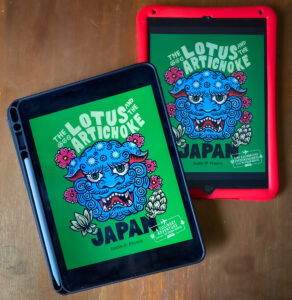
A few weeks back, I posted my recipe for homemade ramen noodles, and since then I’ve been thinking about which of the many ramen dishes from The Lotus and the Artichoke – JAPAN I should share with you first. Shoyu Ramen and Tantanmen (Sesame Ramen) are definitely my go-to ramen recipes to make at home, but I also love a bold Miso Ramen… and, well, I’m quite proud of my vegan Tonkotsu Ramen.
When I sat down to write this today, I thought I’d go with Shoyu Ramen… and started thinking back on all the Shoyu Ramen noodle soups I’ve slurped in Japan and Germany. (There’s actually a great Ramen eatery literally one block from my apartment in Berlin Prenzlauer Berg!) Then my mind wandered back a few years to my first visit to Sapporo. Kolja and I had trekked across town one evening to find a place that specializes in vegan Tomato Ramen.
After the long walk, we sadly discovered the restaurant was closed that day… so we had to move on and find somewhere else for dinner. The next day, we checked the hours (smart, eh?) and anxiously returned to the Tomato Ramen place. It was open! The atmosphere wasn’t quite as fantastic as many of the ramen joints I’ve eaten at, but our lunch was quite delicious. And it was fun to try a new type of ramen… at an all-vegan place. After the meal, I scribbled some notes in my sketchbook – to go with the photos I’d taken and quick sketch I’d drawn.
Several weeks later, back in Berlin, I set out to recreate the noodle soup from Sapporo. Ultimately, I did things a bit differently – the Sapporo shop garnished their bowls with colorful, chopped, fresh bell pepper and some other salad greens. It might have been fresh spinach – which also works well with Tomato Ramen, btw. They also used fried soy mince, but I spiced mine up. I’m quite happy with the results… and I’m sure you will be, too!
You can use my recipe to make your own homemade ramen (chukka) noodles, soak 2 packages of ramen noodles (the soft kind that come in vacuum-packed packages – not the instant ones) in hot water, or use quick-cooking (almost instant) noodles from the Asian import shop or grocery store. Homemade everything is almost always the best, but I don’t always have time for that! Oh, and if you’re lucky you might be able to get imported fresh (or frozen) ramen noodles which you can cook up at home, too. However you do it, this recipe has got your covered. There are instructions for each kind of ramen noodles, whether packaged or fresh.
If texturized vegetable protein (TVP) a.k.a. soy mince is not your thing, you can fry up some crumbled tofu or plant-based meat crumbles instead. You might want to adjust the salt and seasonings a bit. I don’t always make the roasted nut topping (below) and sometimes go with other garnishes, like Furikake, or just roasted sesame seeds. I’ve also got to mention that fresh basil on this is excellent, too.
One of the reasons I’ve started with the Tomato Ramen for the website post today is because the broth (Dashi) is super simple – some of the others in my JAPAN cookbook & e-book require just a bit more prep. This one is the fastest, and you also end up with just the right amount of shiitake mushrooms, too. Sometimes I whisk in a tablespoon of sesame paste or miso paste along with the tomato paste, and I also often add 1–2 tsp lemon juice before simmering the broth. These tweaks often need balancing with more soy sauce and sugar (or mirin), or alternately, increasing the water amount slightly. As with any ramen noodle recipe, the variations and options are endless.
Tomato Ramen
noodles in tomato broth with arugula & soy mince
serves 2 / time 45 min +
recipe from The Lotus and the Artichoke – JAPAN
(Rezept auf Deutsch unten)
arugula topping:
- 2–3 cups (40 g) arugula (rocket) chopped
- 1 tsp lemon juice
- 1 tsp sesame oil
- 1/4 tsp sea salt
soy mince:
- 1/2 cup (30 g) soy mince (TVP)
- 2 spring onions chopped
- 2 cloves garlic crushed or minced
- 1/2 in (1 cm) fresh ginger minced
- 1 Tbs sesame oil
- 1/8 tsp black pepper ground
- 2 tsp shoyu (soy sauce)
- 2 tsp dark soy sauce
- 2 tsp rice vinegar or lemon juice
- 2 tsp mirin or raw sugar
roasted nut topping:
- 2 Tbs (15 g) cashews
- 1 Tbs (10 g) sesame seeds
- 1 tsp nutritional yeast flakes optional
- 1/4 tsp sea salt
tomato tare & broth:
- 3 medium (10 g) dried shiitake mushrooms
- 3 cups (700 ml) boiling hot water
- 3 Tbs tomato paste
- 3 Tbs shoyu (soy sauce)
- 2 Tbs mirin or raw sugar
- 1 Tbs rice vinegar
- 1 Tbs sake optional
- 2 tsp raw sugar
noodles:
- 14 oz (400 g) Ramen noodles
or 2 packages (ea. 7 oz / 200 g) ramen noodles
or 9 oz (250 g) quick-cooking noodles
- Combine chopped arugula, 1 tsp lemon juice, 1 tsp sesame oil , and 1/4 tsp salt. Set aside.
- Heat a small pan on medium heat. Roast cashews, stirring frequently, 3–4 min. Add sesame seeds and continue to roast, stirring constantly, another 1–2 min. Remove from heat. Let cool 10 min.
- Add roasted cashews and sesame seeds to a small food processor or blender. Pulse several times to coarsely grind. Transfer to a bowl and stir in nutritional yeast flakes (if using) and 1/4 tsp salt. Set aside.
- In a medium pot, cover dried shiitake mushrooms with 3 cups (700 ml) boiling hot water. Let soak for 20–30 min. Remove soaked mushrooms. Squeeze to expel broth back into pot. Chop mushrooms.
- Add soy mince to a bowl and cover with boiling water. Let soak for 10 min. Drain and discard soaking water. Press to expel excess liquid.
- Heat 1 Tbs sesame oil in a large frying pan or wok on medium heat. Add chopped spring onion white ends, garlic, ginger, and ground black pepper. Stir-fry until aromatic, about 1–2 min.
- Add soaked soy mince and chopped mushrooms. Fry until lightly browned, stirring often, 3–5 min.
- Add 2 tsp shoyu, 2 tsp dark soy sauce, 2 tsp rice vinegar or lemon juice, and 2 tsp mirin or sugar. Fry until crispy and scorched, stirring regularly, another 2–3 min. Transfer fried soy mince to a plate.
- In a mixing bowl, whisk shiitake mushroom broth, tomato paste, 3 Tbs shoyu, 2 Tbs mirin or sugar, 1 Tbs rice vinegar, 1 Tbs sake (if using), and 2 tsp sugar.
- Carefully pour the whisked mixture into the hot pan or wok. Bring to simmer, stirring regularly.
Simmer gently on low heat for 3–5 min. Turn off heat. Cover until ready to serve. - If using fresh Ramen noodles, cook according to recipe (page 195) in rapidly boiling water,
stirring often, until al dente, 90–120 sec. If using packaged ramen noodles or quick-cooking noodles, cover with boiling water in a pot and let sit 10 min. - Thoroughly drain noodles and portion into bowls. Carefully pour or ladle the hot tare & broth
onto the noodles. Stir gently with a chopstick to prevent them from sticking together. - Arrange arugula and fried soy mince and mushrooms in the bowls.
- Garnish with chopped spring onion greens and roasted nut topping. Serve.

Ramen (Chukamen)
Nudeln in Tomatenbrühe mit Rucola & Sojahack
2 Portionen / Dauer 45 Min. +
Rezept aus The Lotus and the Artichoke – JAPAN
Rucola-Topping:
- 2–3 Tassen (40 g) Rucola geschnitten
- 1 TL Zitronensaft
- 1 TL Sesamöl
- 1/4 TL Meersalz
Sojahack:
- 1/2 Tasse (30 g) Sojagranulat
- 2 Frühlingszwiebeln gehackt
- 2 Knoblauchzehen fein gehackt
- 1 cm frischer Ingwer fein gehackt
- 1 EL Sesamöl
- 1/8 TL schwarzer Pfeffer gemahlen
- 2 TL Shoyu (Sojasauce)
- 2 TL dunkle Sojasauce
- 2 TL Reisessig oder Zitronensaft
- 2 TL Mirin oder Rohzucker
Cashew-Sesam-Topping:
- 2 EL (15 g) Cashewkerne
- 1 EL (10 g) Sesamsamen
- 1 TL Hefeflocken wenn gewünscht
- 1/4 TL Meersalz
Tomaten-Tare & -Brühe:
- 3 mittelgroße (10 g) getrocknete Shiitake-Pilze
- 3 Tassen (720 ml) kochendes Wasser
- 3 EL Tomatenmark
- 3 EL Shoyu (Sojasauce)
- 2 EL Mirin oder Rohzucker
- 1 EL Reisessig
- 1 EL Sake wenn gewünscht
- 2 TL Rohzucker
Nudeln:
- 400 g Ramen-Nudeln (Seite 195)
oder 2 Packungen (je 200 g) Ramen-Nudeln
oder 250 g Quick-Cooking-Weizennudeln
- Rucola, 1 TL Zitronensaft, 1 TL Sesamöl und 1/4 TL Salz in einer Schüssel vermengen und beiseitestellen.
- Eine kleine Pfanne auf mittlerer Flamme erhitzen. Cashewkerne hinzufügen und unter häufigem Rühren 3 bis 4 Min. leicht rösten. Sesamsamen hinzufügen und 1 bis 2 Min. weiter rösten. Vom Herd nehmen. Nüsse und Samen in eine Schüssel geben. 5 bis 10 Min. abkühlen lassen.
- Geröstete Nüsse und Samen in eine Küchenmaschine oder einen Mixer geben und grob mahlen.
In eine Schüssel geben und mit Hefeflocken (falls verwendet) und 1/4 TL Salz vermischen. Beiseitestellen. - Getrocknete Shiitake-Pilze mit 3 Tassen (700 ml) kochendem Wasser bedecken und 30 Min. einweichen lassen. Pilze herausnehmen, über dem Topf ausdrücken und grob hacken.
- Sojagranulat in eine Schüssel geben und mit kochendem Wasser bedecken.
10 Min. einweichen lassen. Wasser abgießen, Granulat ausdrücken und gut abtropfen lassen. - 1 EL Sesamöl in einer Bratpfanne oder im Wok auf mittlerer Flamme erhitzen. Weiße Frühlingszwiebeln, Knoblauch, Ingwer und schwarzen Pfeffer zugeben. 1 bis 2 Min. unter Rühren anbraten.
- Eingeweichtes Sojahack und gehackte Pilze zugeben. 3 bis 5 Min. unter Rühren braten.
- 2 TL Shoyu, 2 TL dunkle Sojasauce, 2 TL Reisessig oder Zitronensaft und 2 TL Mirin oder Zucker hinzufügen. Unter Rühren 2 bis 3 Min. kross braten und auf einen Teller geben.
- In einer Rührschüssel Shiitake-Brühe, Tomatenmark, 3 EL Shoyu, 2 EL Mirin oder Zucker,
1 EL Reisessig, 1 EL Sake (falls verwendet) und 2 TL Zucker verrühren. - Angerührte Mischung vorsichtig in die heiße Pfanne oder den Wok geben. Unter Rühren zum Kochen bringen und auf niedriger Flamme 3 bis 5 Min. köcheln lassen. Flamme abstellen. Bis zum Servieren abdecken.
- Bei Verwendung von frischen Ramen-Nudeln diese nach Rezept in kochendem Wasser
90 bis 120 Sek. bissfest garen. Bei Verwendung von verpackten Ramen- oder Quick-Cooking-Nudeln diese in einen Topf geben, mit kochendem Wasser bedecken und 8 Min. stehen lassen. - Nudeln abtropfen lassen und in vorgewärmte Schüsseln geben. Heiße Brühe über die Nudeln gießen oder schöpfen und mit Stäbchen leicht umrühren.
- Rucola-Topping, gebratenes Sojahack und Pilze anrichten.
- Mit gehacktem Frühlingszwiebelgrün und Cashew-Sesam-Topping garnieren und servieren.